


|
Calendar Veda Loka
2026 THE YEAR OF DHARMA PREACHING
24 October
Saturday 2026 year 00:00:00
Time
chronology 5121 years of Kali Yuga,
28th Mahayuga 7th Manvantara The era of Manu Vaivasvata boar Kalpa first day of 51 years of the great First-God-Creator |
||


|
Latest Updates
|
||
|
Video Updates
|
||
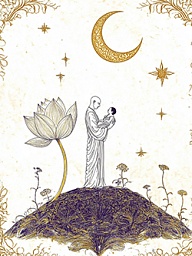
The Precious Teachings on the Sixteen Stages of the Increasing Moon of Inner Awareness
Product code: 34202
Swami Vishnudevananda Giri
The Precious teachings on the Sixteen Stages of the Increasing Moon of Inner Awareness. Collection compiled based on the materials of the master's lectures/ Swami Vishnudevananda Giri
Translation from Russian by V.V. Valyuzhenich
In this book, Swami Vishnudevananda Giri, a Russian-speaking master of Advaita Vedanta, will explain the meaning and principles of the Teachings of 16 Kalas. This book contains “The Precious Teachings on the Sixteen Stages of the Increasing Moon of Inner Awareness” and six lectures explaining in detail the essence of the Teaching.
Foreword
The teaching of "The sixteen stages of the increasing Moon of Inner Awareness" belongs to the category of "upadesha" - oral instructions on contemplative practice transmitted from the Teacher to a student in the continuous tradition of siddha yogis following the natural path of self-liberation and self-realization - sahajya-pratyabhijna.
In addition to tantric sources of oral tradition, indirect references to the teaching "The sixteen stages of the increasing Moon of Inner Awareness" are found in texts describing the philosophy of Sankhya and yoga, in particular, in the "Moksha Dharma", which in turn constitutes the second half of the twelfth book of the outstanding ancient Indian epic "Mahabharata".
Analysis of references in other canonical texts suggests that this line of instruction is much more ancient than, in fact, the tantric tradition of the siddhas, whose age researchers and historians estimate to be one or two thousand years.
Sankhya is one of the oldest philosophical systems that appeared much earlier than the tantric tradition. If the emergence of the tantric traditions of Hinduism is closely connected with a "close" to our time generation of Indian mahasiddhas, such as Matsyendranath, Gorokhonath, Jalandharinath etc., belonging to mixed tantric traditions (natha, aghora, kaula, kanphata, sahajiya, bauddha, etc.) and who at one time assimilated many features of Buddhism and Chinese Taoism (mahachina-krama), then Sankhya, as a spiritual and philosophical system, originates in a much earlier (from 5 thousand years) tradition of ancient rishis ("seers"), the Upanishads and the Vedas. The first mention of the Sankhya tradition, particularly, can be traced in Chandoghya Upanishad and Mantrayana.
The teaching "The sixteen stages of the Inner Moon" has reached to the present day, thanks to the continuity of the oral tradition of the siddha masters in a kind of “inner doing”, inherent in Laya Yoga.
Unlike references in the Moksha Dharma and other texts, where the teaching is taught in the spirit of Sankhya as a system of analytical understanding of the constituent parts of the body and mind, which serves to overcome the samsaric dichotomy - Purusha-Prakriti, jiva-Atman, Maya-Brahman, tantric tradition of siddhas sahajiya considers it precisely as a description of the stages of contemplative practices developing in the stream of consciousness of the adept yogi.
In the process of discovering the nature of the "I" and the development of contemplation, special emphasis is placed on the uncovering of non-conceptual, non-dual vision, space-like, saturated with bhava (pride of the deity) and awakening the inner powers of the yogi (ichchha-shakti, kriya-shakti), which grant him the power over the elements, time and space.
In this regard, in the tradition of the teachings of Laya Yoga, the oral instructions on “The sixteen stages of the increasing Moon of Inner Awareness" occupy a special place, being the quintessence, "central channel" of the entire teaching, describing in detail the stages of the ascent of consciousness in contemplative practice.
The “Moon” in the context of the Laya Yoga tradition means the inner “I” of a person, the nature of the mind, the fundamental void Ground of Being, primordial awareness (Prajnana), which grows gradually, phase by phase, like the young moon for sixteen "spiritual days", when exercised in contemplative practice.
The pure mind is compared to a mirror in many tantric texts on contemplation.
“Just as a mirror takes on the colors of images, so the pure Mind takes on various forms of objects by holding them within oneself.”
“Tripura Rahasya” Chapter XVI (20)
Until we start contemplative practice, our Higher Self, although it has a pure and enlightened nature, is, nevertheless, covered with obscurations resulting from fundamental ignorance.
It is like a mirror coated with a layer of resin. The reflectivity of a clear mirror remains, but it reflects only the resin. Entering contemplative practice means activating the mind's ability to recognize its Source - the "clear mirror" of the natural Mind, in which the Moon of the Inner Awareness shines.
The conception and development of the capacity for contemplative presence is likened to the process of conceiving, nurturing a fetus, giving birth to and raising an inner child. This spiritual child is the "inner moon of awareness," which the successful yogi cultivates within himself throughout his life.
As the inner child develops, increasing his power, he unites with the Supreme Source and the infinite variety of things in the universe, and giving the yogi a precious chance to enter the circle of immortal gods.
Beginning from the unawakened, suffering human state, full of obscurations, limitations and ignorance, a yogi sequentially, one after another, goes through all the stages of development of the inner child – the "Moon of Awareness", up to transformation into a deity, creating new universes, creating its own worlds – Brahma and others.
By mastering the "path of naturalness" and by nurturing contemplation in accordance with the instructions of the root Master, the yogi not only completely eliminates the klesha affects and purifies his karma during this life, but also goes much, much further – discovering the luminous void nature of the Mind, he manifests the creative powers – the power of will and the power of awakened actions (ichchha and kriya shakti) and fully realizes the Great Transition to another, pure dimension of the perfect, wondrous Being – the mandala of pure vision, into a new creative status of the liberated divine superbeing, full of inspiration, delight, greatness, purity, beauty, harmony, strength and power God-creator of their own universes, practically realizing in his experience the highest statement of Vedic philosophy in terms of boldness, humanism and flight of spirit, "Aham Brahmasmi" - "I am the Supreme”.
Swami Vishnudevananda Giri
Contacts of "Worldwide Sanatana Dharma Community":
Omkar +380684188899 (Telegram, Viber, Whatsapp)