


|
Calendar Veda Loka
2026 THE YEAR OF DHARMA PREACHING
24 October
Saturday 2026 year 00:00:00
Time
chronology 5121 years of Kali Yuga,
28th Mahayuga 7th Manvantara The era of Manu Vaivasvata boar Kalpa first day of 51 years of the great First-God-Creator |
||


|
Latest Updates
|
||
|
Video Updates
|
||
Five Yantras of Laya Yoga
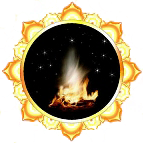
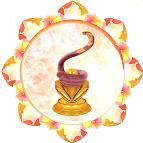
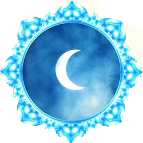
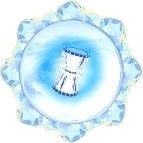
The path of wisdom (Prajna Yantra) involves mastering a continuous contemplative state, immersion in the Supreme Source (Sahaja Sthiti). To do this, a yogi trains in sitting and moving meditation.
The path of energy (Shakti Yantra) includes practices of working with energy channels (nadis), winds (prana) and centres (chakras) to awaken Kundalini, experience the nectar of immortality, release the subtle body, gain continuous consciousness in samadhi, reveal the four bliss and five spaces in the body.
The path of the illusory body (Nidra Yantra) develops awareness in dreams. It includes the practices of the illusory body and pure land in the context of the teachings of the path of the subtle body, illusory body yoga, pure land yoga, dream yoga and sleep and clear light yoga.
The path of sound yoga (Nada Yoga) includes ten stages of concentration on internal sounds to achieve nirvikalpa samadhi and, a practice where the yogi works with the unity of sound and void awareness.
The path of light yoga (Jyoti yoga) involves secret methods of contemplating light, which in a short time generate light visions: deities, mandalas, spheres of light, etc. While practising contemplation, the yogi works with visions, sequentially going through four stages: "beginning", "vessel", "increase", and "exhaustion".
- Four levels of Teaching
- There are four levels in the Teaching:
- l external,
- l interior,
- l secret,
- l transcendental.
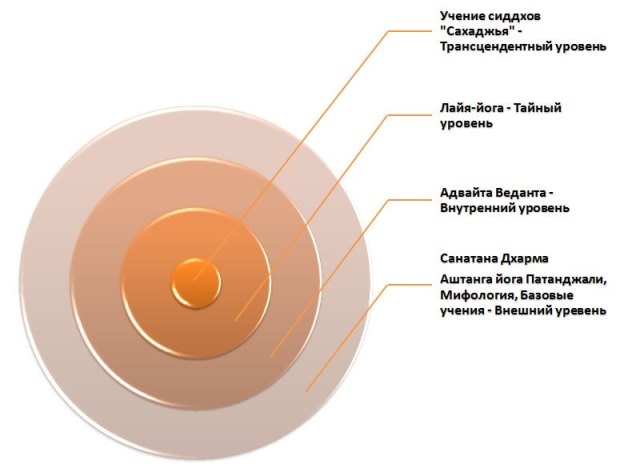
It is essential to understand these four levels of Teaching and not to confuse them.
The external level includes the universal Sanatana Dharma: the principle of the unity of all religions, the ideas of universal Enlightenment and the transition to God-manhood, mythology, etc.
As a philosophical system, the basis of the view, Advaita Vedanta belongs to the internal level.
The secret level includes the methods of Laya yoga of the siddhas: contemplation, Kundalini yoga, Nada yoga, Jyoti yoga, Yoga of sleep and dreams, etc. These are methods of direct immersion in the state of non-duality (Pratyaksha-advaita).
The transcendental level is beyond the name, form, words, and methods - it is in an unsupported state of awareness (niralambha), in the natural primordial state of the nature of the Mind (Sahajya) without thoughts, evaluations and concepts (amanaska).
Often, beginning practitioners, not understanding the depth, breadth and transcendence of the Teaching, see some small fragment of it and, based on this fragment, try to form their own opinion, rigidly fixing the Teaching, not taking into account that it has several levels.
The first two of them are exoteric levels. They are understandable to ordinary people. The third level is available to real sadhus, those who have devoted themselves to sadhana and know a lot about retreats.
Finally, the deepest, extraordinarily secret, transcendental heart essence of the Teaching lies in the transcendental level - this is being in the natural state (Sahajya).
This state in itself is Enlightenment. Methods cannot achieve it, no one can teach it, and it cannot be described by philosophy. It is impossible to talk about it without falling into errors, but it is possible to remain in it. The external, internal and secret levels are needed only to immerse yourself in this state.
The teaching of Laya Yoga is like a giant, beautifully flowering tree with roots, a trunk, branches, leaves, flowers, and fruits. All teaching methods are located in their place. They are perfectly combined and harmoniously coexist in the Tree of the Teaching, without contradictions with each other. Everything in it has its function, purpose and purpose.
In order to understand Laya Yoga, you need to study the four levels of the Teaching, as well as the Tree of the Teaching, and see the difference in levels and the difference between roots, trunk, branches, flowers and leaves.
Laya Yoga - the teaching of three freedoms
There are no theories in my mind
things to think about,
There are no words, mantras or prayers in speech,
which one should pronounce
There are no actions or rituals in behaviour,
which one should perform.
Initially released
nine actions...
What a joy!
What a joy!
Natural mind,
contemplating itself
spontaneously plays thousands of dharmas!
Traditionally, the teaching of Laya Yoga of the Siddhas is considered the highest, final, culminating “chariot”, but not in the sense that it is superior to other teachings, but in the fact that it is not associated with conventions, divisions and concepts and has the property of directly pointing to the ineffable the nature of Reality.
The teaching of Laya Yoga does not belong to any Hindu school or sect, nor is it an ordinary, “everyday” religion. Laya Yoga, being beyond words, methods and symbols, is the heart centre of any spiritual tradition, revealing itself as its inner essence.
“Smart doing” in Christian hesychasm, the ecstasy of a Sufi, and the illogical attacks of Zen masters have the same basis - immersion in non-conceptual awareness, which is the main principle of the teachings of Laya Yoga.
Siddhi-avadhutas, living in immeasurable freedom, practised Laya yoga within various faiths: Hinduism, Buddhism, Sikhism, and Taoism.
The teaching of Laya Yoga is often called the teaching of the “three freedoms,” which means true freedom in the manifestations of body, speech and consciousness:
the body is allowed to be free from rituals of worship and any artificial norms of behaviour,
speech is allowed to be free from mantras, prayers and chants,
the mind is allowed to be free from being bound by philosophy, doctrinal theories or postulates.
“Allowed to be free” means that when we practice, we are in a state of contemplative presence, an open awareness that is like the sky and has no limitations.
In this state, we can perform any action that instantly self-liberates upon manifestation, turning into a spontaneous play of body, speech and thoughts. Thus, any external manifestations from the point of view of Laya Yoga represent a spontaneous play of activity (lila) and are not something uniquely frozen, valuable or real.
While in presence, a true Laya Yogi does nothing, remaining in inaction. When doing something, he is only playing, or at least trying to view his manifestations that way.
This approach is entirely consistent with the way of life and practice of the great Siddha-Avadhuta saints of our lineage, and it is also repeatedly described in classical texts.
He accepts like a child all conditions that surround him owing to the desires of others. Just as an innocent boy is absorbed in his game without worrying about hunger, thirst, or physical distress, so is the sage absorbed in the play of his own Self without ego-consciousness and delights permanently in the Self.
No code or rule of conduct binds him, for he is permanently free. Although sleeping on the ground like a child or madman, he remains ever fixed in Vedanta. Mother Earth is the flowery couch on which he lies. He sleeps without fear in the forest or cemetery, for his sport and pleasure are in Brahman.
He who is the Universal Self assumes at will countless forms and has countless experiences. In one place he behaves like an idiot, in another like a learned man, and in third like one deluded. Again, in one place he moves about as a man of peace, in another as a king, in another as a beggar eating out of his hand for want of a bowl. At one place he is seen to be adored, at another decried. Thus he lives everywhere and the Truth behind him cannot be perceived by others.
Although he has no riches he is eternally in bliss. Although others may not help him he is mighty in strength. Although he may not eat, he is eternally satisfied. He looks on all things with an equal eye. Though acting, it is not he who acts; though eating, it is not he who eats; though he has a body, he is bodiless. Though individualised, he is the One Indivisible whole.
Sri Adi Shankaracharya, “Vivekachudamani”
When we accept such views, this does not mean that we cannot follow any principles, rules, methods of practice, accept any statuses, obligations, etc.
Nothing conditions a yogi who follows the highest Dharma, and he is free to choose or accept those methods that help him in practice or manifest himself in the form or status close to him. If necessary, the yogi can perform prostrations, recite mantras and take vows, but his attitude towards them is entirely different from the actions of ordinary “non-self-liberated” practitioners: the yogi sees them as a play (lila)hing self-sufficient. The difference here is about the same as between a perform and not as sometance and ordinary “real” life.
Outwardly, there may be complete similarity, but in essence, there is a distance the size of the infinite Universe. Play does not mean something fake or frivolous. We are completely sincere when playing and devote ourselves to the practice process. The peculiarity is that we do not identify with the external.
From this point of view, Laya Yoga can be adequately practised within any spiritual tradition or traditional religion, not rejecting but using its images, style or attributes as its heart essence.
This means that any Christian, Jew, Hindu, etc., can fully practice Laya Yoga without giving up the images, symbols and concepts he is accustomed to.
What is important here is the presence of transfer to teaching methods, the presence of a connection with the Spiritual Teacher, Master and perfect mastery of practice methods.
A similar approach exists among magicians and shamans in various world traditions. As a rule, magicians and shamans stand apart, aloof from “broad” religious paths, nevertheless using their religious attributes for their practical purposes.
Shamans and magicians have schools and authoritative methods, but there is no attachment to nationality or identification based on religious affiliation. Thus, a fully self-respecting magician-healer working in the Orthodox tradition, without any embarrassment, can use voodoo witchcraft rituals if there is a practical need for it and a Tibetan shaman can freely be initiated into the tradition of magic of the Hopi Indians at the same time. Shaman magicians demonstrate flexibility toward achieving their goals by adhering to certain customs, symbols or principles.
Siddha-Masters act similarly, with the only difference being that their goals lie not in the plane of human interests but immeasurably, much higher - in the transcendental.
A similar approach demonstrated many outstanding ancient and modern siddha saints: the Tamil siddha Boganathar, known in China as Bo-Yang, Sai Baba of Shirdi, who performed prayers in the mosque and Hindu temples simultaneously; Sri Ramakrishna, who “played” various religions, Neem Karoli Baba, who worshipped Hanuman along with Christ, the present Avatar Bhagavan Sri Sathya Sai Baba, Avatar Sri Satchitananda Ganapati and others.
Laya Yoga and Traditional Hinduism
When it is said that the Teaching of Laya Yoga is a tantric tradition of the Siddhas, its difference is especially emphasised from the so-called traditional orthodox Hinduism with its caste system, four ways of life (ashrams), numerous gods, ritual practice, holidays and symbolism.
While we greatly sympathise with traditional Hinduism, we clearly understand the difference between the traditional “everyday” folk Hinduism inherent in “ethnic” Hindus and the tradition of the Siddhas.
Of course, not being ethnic Hindus, we, Russian-speaking followers of Laya Yoga, can neither fully accept Hinduism nor fully follow it since we live in a completely different cultural environment.
However, from the point of view of Avadhuts, Siddhas, adepts of yoga and Tantrism, this is not required since the teachings of the Siddhas are not, strictly speaking, Hinduism, but are beyond any cultural, ethnic, social, caste, clan and other restrictions.
Siddha-avadhutas were not limited by the framework of their religion, the culture, or the environment of their country, although they did not reject them. By nature, they were in the global universal-cosmic Consciousness, integrating all spiritual paths, cultures and traditions into their vision.
The teaching of the Siddhas of Tantrism was not about following orthodox Hinduism but, on the contrary, about liberation from its framework, conventions and restrictions. For this purpose, siddhas sometimes consciously violated the norms of traditional caste morality, ritual desecration, antisocial behaviour, etc.
The living spirit of the Siddhas was based on the practice of play, the freedom of natural awareness beyond any framework and regulations, and the secret transmission of Teacher-disciple.
As followers of the internal “secret path” of awareness, siddhas could mimic and adapt to any religion to not draw attention to themselves.
During the day, he appears to be a follower of Shaivism; at night, he follows the path of Shakti; attending meetings, he seems to be a Vaishnava.
Kularnava Tantra
This explains the ease with which the Siddhas identified themselves with Buddhism, Hinduism, Islam and even Christianity (as in the case of Sarah, Kabir, Sai Baba of Shirdi, Ramakrishna, Neem Karoli Baba and other saints).
This also explains the veneration of siddhas simultaneously in Buddhism, Hinduism and other religions (Buddha, Matsyendranath, Gorakshanath, Charpatinath, Boganathar and others). For them, it was part of the divine game (lila), a way to hide their true transcendental timeless essence, independent of cultural conventions, from the curious and uninitiated, whose superficial interest could not accommodate the depth of their Consciousness.
Continuing the teachings of the Siddhas, following the spirit of their teachings and lineage in a different cultural environment, we still try to preserve the lineage of teachings, secret yoga methods and spiritual connection with the Siddhas.
However, this does not mean we should imitate ethnic Hindus or have a complex about the fact that we cannot do this well. This would be a big mistake from the Siddha’s point of view and a manifestation of our inflexibility and lack of knowledge of how to follow the spirit of the teaching. By maintaining contact with the transmission lineage, we must feel quite comfortable and adequate in our cultural environment, harmoniously integrating all its values, achievements and traditions, nevertheless maintaining the purity of the transmission lineage - the living spirit of the Siddha Teachings.
Contacts of "Worldwide Sanatana Dharma Community":
Omkar +380684188899 (Telegram, Viber, Whatsapp)